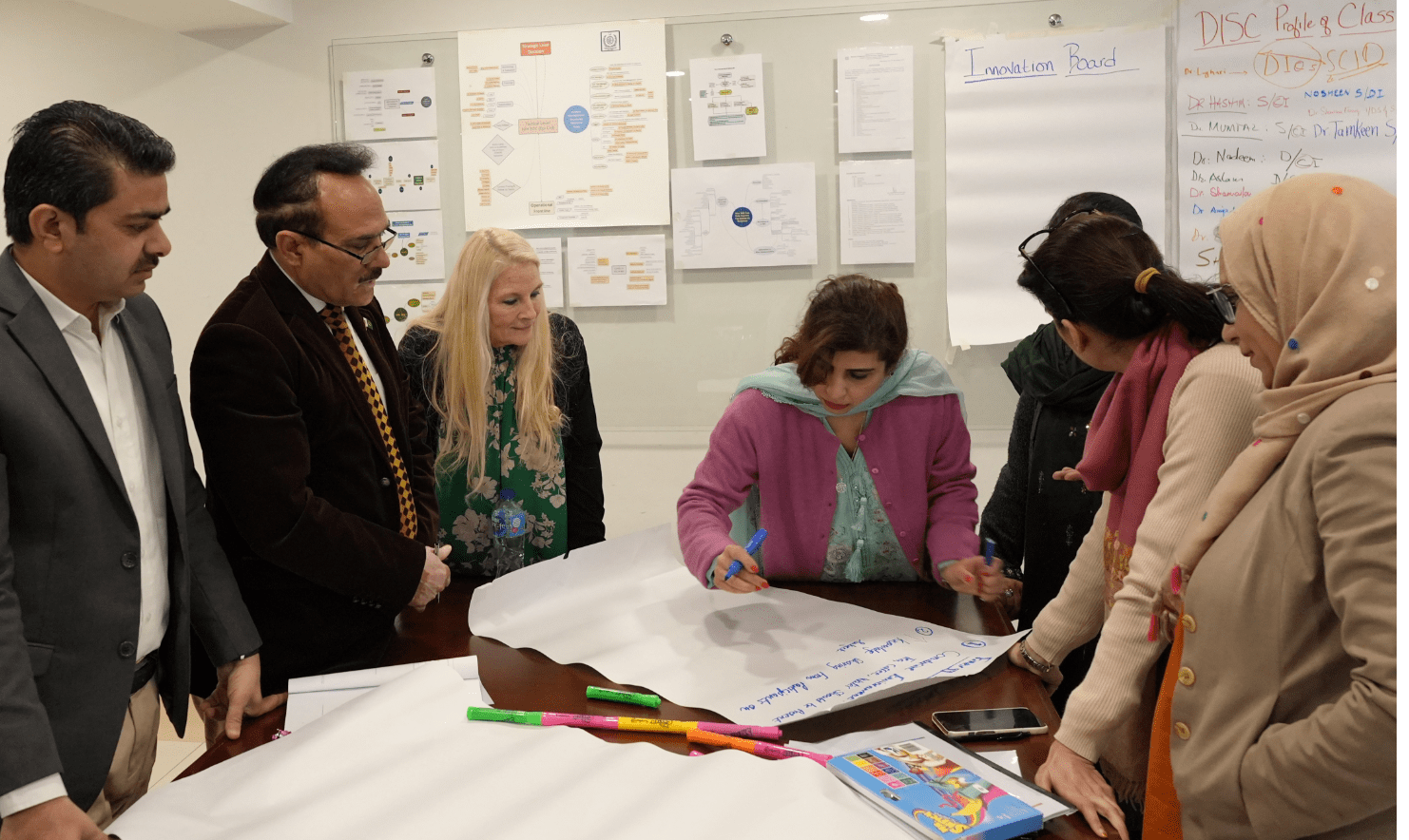
Team collaborating on a project

Enhance Your Team’s Performance and Impact

Collaborating with our clients, we create learning experiences in traditional settings and online based on proven adult learning principles and neuroscience.

Our Services

Instructional Design & Development

Effective training begins with a structured, proven approach. Our instructional design and development services are guided by the PADDIEM model—Plan, Analyze, Design, Develop, Implement, Evaluate, and Maintain. This approach ensures that every program is tailored, quality-focused, and optimized to meet the specific needs of public health organizations. With PADDIEM, we create learning experiences that empower your team with the skills and knowledge they need to respond to complex challenges confidently.

Hand reaching for sticky notes on desk

A Proven Framework For Success

P

Plan

Build the training materials based on the design, including content creation, visuals, and interactive elements.

A

Analyze

Assess the learning needs, identify gaps, and understand the target audience to inform the design of the training.

D

Design

Create a detailed blueprint of the training, including learning objectives, content, delivery methods, and assessments.

D

Develop

Build the training materials based on the design, including content creation, visuals, and interactive elements.

I

Implement

Deliver the training to the target audience through facilitator-led sessions, eLearning, or blended learning approaches.

E

Evaluate

Measure the effectiveness of the training, collecting feedback and performance data to assess its impact.

M

Maintain

Continuously update and improve the training materials to ensure they remain relevant and effective over time.

Facilitation

We provide expert facilitation of workshops, meetings, and group events to foster collaboration and innovation. We also provide facilitation training that transforms the classroom from pedagogy to andragogy.

Technical Writing

We develop policies, procedures, standard operating procedures, and scientific manuscripts to support our client’s strategic and tactical initiatives.

Public Health Capacity Building

We analyze, develop, implement, and evaluate public health programs to meet the countries’ needs and adhere to International Health Regulations.

Group discussing ideas in a modern office

How It Works

Phase 1

Conduct PHEM/PHEOC Capacity Review

The review is conducted on-site to determine what capacities are in place and the long-term desired outcomes for capacity development. The results are captured, and a work plan is developed to complete the project.

Phase 2

Create Capacity Development Plan

The results are captured in a Capacity Development Plan (CDP), which includes action items for updating or developing the PHEM Program and operation center(s).

Phase 3

Implement Capacity Development Plan

The implementation would involve activities in these categories:

  • Program communication strategy
  • Policies, Plans, and Procedures as identified In the CDP
  • Equip the physical PHEOC as approved
  • Training-learning paths based on roles and responsibilities
  • Exercises to practice in the PHEOC
  • Life-cycle Maintenance

Phase 4

Evaluate PHEOC Performance

APL will evaluate the program using WHO’s Joint External Evaluation (JEE) tool. The evaluation’s results will identify strengths and areas of opportunity for continued capacity development.

Empower Your Team With the Tools to Face Any Challenge

Whether you are preparing for a public health emergency or looking to enhance team performance, you have the power to create measurable improvements in communication and efficiency. By leveraging our tailored solutions, your organization can lead with confidence, improve outcomes, and become a model of excellence in public health.